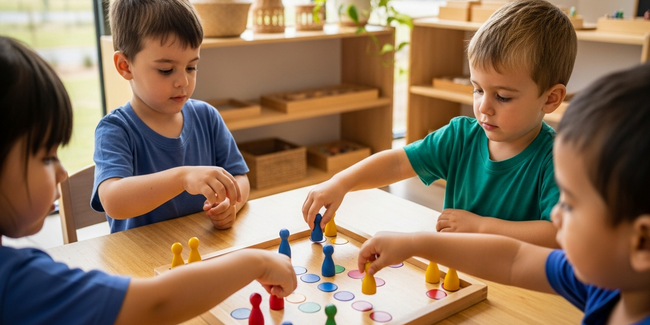
When we watch a three-year-old carefully place a puzzle piece, or a four-year-old negotiate the rules of a simple board game, we’re witnessing something remarkable: the early development of strategic thinking. These moments aren’t just play — they’re the foundation of cognitive skills that will serve children throughout their learning journey and beyond.
At Okinja Early Learning Centre on the Sunshine Coast, our play-based, Reggio-inspired program is built on the understanding that strategic thinking develops most powerfully when children are free to follow their curiosity through emergent play experiences. Within the Early Years Learning Framework, this kind of play sits at the heart of how young children come to understand themselves, the people around them, and the world they’re growing into.
The Neuroscience Behind Strategic Thinking in Early Childhood
Strategic thinking involves several regions of the brain working together. The prefrontal cortex — the part responsible for planning, decision-making, and self-regulation — begins developing in infancy and continues maturing well into the early twenties. The foundational neural pathways that support strategic thinking, however, are largely laid down during the early childhood years, through the kind of repetitive, engaging, hands-on experiences that play-based learning is designed to provide.
This is why we treat play so seriously. When a child works out which puzzle piece fits where, decides how to share a turn fairly, or experiments with how a ball rolls down a slope, they’re not just having a good time — they’re building the brain architecture that will later support complex reasoning, pattern recognition, and flexible thinking,
These developments show up in observable ways. Children begin to anticipate consequences. They start considering more than one solution to a problem. They adapt their approach when something doesn’t work. Strategy games — formal or improvised — give them a natural environment to practise all of this.
Strategic Thinking: A Developmental Journey
Under 2 Years: The Foundation Builders
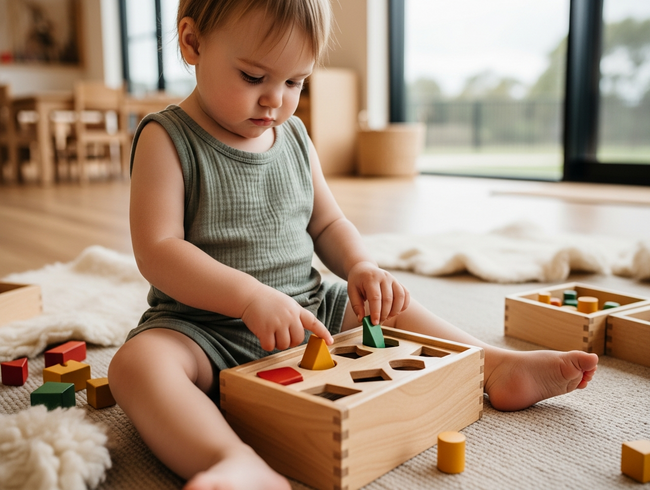
Before children can engage with traditional strategy games, they’re already building the foundations of strategic thinking. Simple cause-and-effect toys — shape sorters, stacking rings, pop-up boxes — introduce the idea that actions have predictable outcomes.
At this stage, children are learning what researchers sometimes call “micro-predictions” — understanding that pushing a button makes a sound, or that letting go of a toy will make it fall. These early experiences lay the groundwork for the more complex thinking that comes later.
Ages 2-3: The Rule Architects
Two and three-year-olds are natural rule-makers and rule-breakers. They begin to understand that games have structure, but they’re also driven to test that structure and reshape it. Simple matching games, basic puzzles, and turn-taking activities introduce strategic concepts while honouring their developmental need for independence.
In our rooms at Okinja, we often see children this age create their own rules for games — which is actually a sign of sophisticated cognitive flexibility. A child who decides that matching cards should be sorted by colour instead of picture is showing strategic adaptation. This is exactly the kind of thinking we want to support, and our emergent approach gives educators the freedom to follow these moments rather than redirecting children back to the “right” way.
Ages 3-5: The Cooperative Forecasters
Between three and five, children’s strategic thinking takes a significant leap forward. As their Theory of Mind develops — the understanding that other people have thoughts and intentions different from their own — the possibilities for cooperative and competitive play expand dramatically.
This is when children can begin to anticipate a playmate’s move, plan a few steps ahead, and adjust their strategy as the game changes around them. Simple board games, cooperative puzzle challenges, and building activities with shared goals all become rich learning opportunities. They’re also moments where children develop their sense of being, belonging, and becoming — the three principles at the centre of the Early Years Learning Framework that shape our program every day.
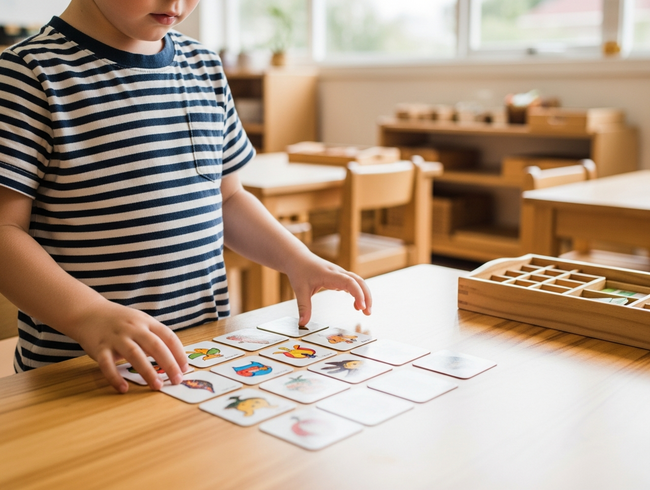
Young children often create their own rules, demonstrating early strategic thinking and cognitive flexibility.
Selecting the Right Strategy Games for Your Preschooler
The key to a successful strategy game experience is matching the cognitive demands of the game to your child’s stage of development. Too simple, and they lose interest. Too complex, and they become frustrated or overwhelmed.
The strategy games that work best for preschoolers tend to share a few characteristics:
- Clear, simple rules that can be modified as your child’s understanding develops
- Visual elements that support memory and planning
- More than one pathway to success, so children can experiment with different approaches
- Opportunities for both independent and collaborative play
- Natural consequences that make cause-and-effect easy to see
Recommended Games by Age Group
Ages 2-3:
- Shape sorting puzzles with multiple solutions
- Simple matching games with familiar objects
- Stacking and balancing toys
- Basic sequencing activities with everyday routines
Ages 3-4:
- Memory games with 4-6 pairs of cards
- Simple board games with paths and destinations
- Cooperative puzzle challenges (12-24 pieces)
- Building games with specific challenges or goals
Ages 4-5:
- Strategy board games with multiple decision points
- Pattern recognition and completion games
- Planning-based construction challenges
- Simple card games involving strategic thinking
The Role of Adult Facilitation in Strategic Play
Children are natural strategic thinkers, but the right kind of adult guidance can deepen what they’re learning. In early childhood education, we call this intentional teaching — being purposeful about when to step in and when to step back.
This sits at the heart of Okinja’s pedagogical approach. Our educators are guided by the idea that the best learning happens when we actively engage children in play that provokes their thoughts, discussions, questions, and ideas — rather than directing them toward a predetermined outcome. With strategy play in particular, that means a few things
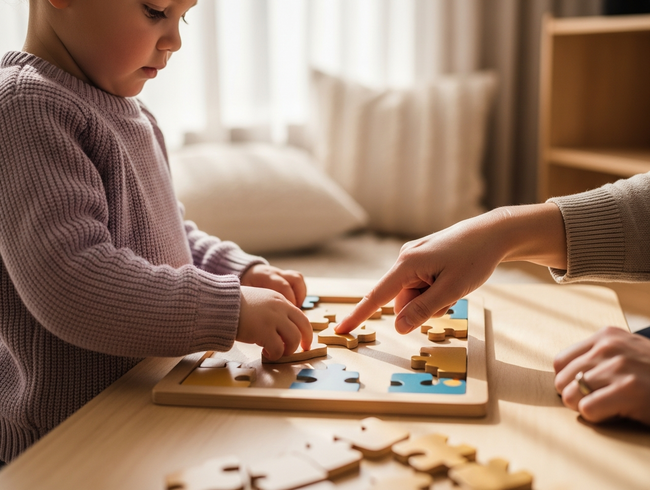
Effective Facilitation Strategies
Modelling our thinking out loud. When educators verbalise their own reasoning during a game — “I’m thinking about where this piece might go. It has a curved edge, so maybe it belongs on the outside of the puzzle” — children pick up the process of strategic thinking, not just the answer.
Asking open-ended questions. Instead of supplying solutions, we ask questions that guide children toward their own discoveries. “What do you think might happen if…?” or “I wonder what would work better here…”
Celebrating the process, not just the outcome. Strategic thinking is built through attempts, not just successes. Acknowledging the try — “You tried a different approach that time. What made you think of that?” — is what reinforces the thinking habit.
Adjusting the challenge as children grow. As a child masters one level of a game, we gradually add complexity — more pieces, new rules, combined challenges — so the play continues to stretch them.
Building Strategic Thinking Through Everyday Moments
Structured games are valuable, but strategic thinking also develops through the ordinary moments of a child’s day. Routine activities are full of natural opportunities to plan, problem-solve, and think flexibly.
Meal Preparation and Planning
Involving children in helping with meals is one of the easiest ways to build strategic thinking. Choosing ingredients, deciding the order of steps, adjusting when something runs out — all of this requires the same kind of reasoning a board game does. Making a sandwich might mean working out which ingredient goes first, how to handle bread that tears, or what to use when something’s missing.
Tidying and Organising
Pack-away time becomes a strategic challenge when children are invited to think about it. “How can we fit all these blocks back in the container?” or “What’s the quickest way to sort these out?” engages problem-solving while building practical life skills.
Open-ended Exploration
Building with blocks, designing a small obstacle course, planning out a pretend trip to the shops — any activity where children are following their own ideas and adjusting as they go is strategic play in action.
Recognising and Supporting Different Learning Styles
Children approach strategic play in different ways, and a strong early childhood program recognises and supports these differences. Some children think most clearly when they can see all the pieces of a problem in front of them — they’re drawn to puzzles, building challenges, and games with rich visual layouts. Others think best with their hands moving, and need to handle, sort, and physically arrange objects to make sense of a problem. Others think narratively, working through challenges by talking them out or weaving stories around what they’re doing.
These aren’t fixed “learning styles” — most children move between modes depending on the task and their mood. But noticing how a child is engaging with a particular challenge helps educators (and parents) offer the right kind of support at the right moment. A child who’s stuck on a puzzle might unblock themselves by talking through what they’re trying to do, or by being given a smaller version of the same problem to solve first.
The Social and Emotional Side of Strategic Play
Strategic thinking isn’t just a cognitive skill. The social and emotional benefits of strategy play are just as significant, and arguably more important for long-term school readiness.
Emotional Regulation and Resilience
Strategy games involve both success and failure by design. Children learn to manage disappointment when their plan doesn’t work, to celebrate their wins without overdoing it, and to keep trying when something is difficult. These are powerful skills — and they develop best in a supported environment where children feel safe to fail and try again.
Social Awareness and Cooperation
Multiplayer strategy games give children practice in reading social cues, understanding other people’s intentions, and coordinating their actions with peers. These are the same skills they’ll lean on in a classroom setting where collaboration is everywhere.
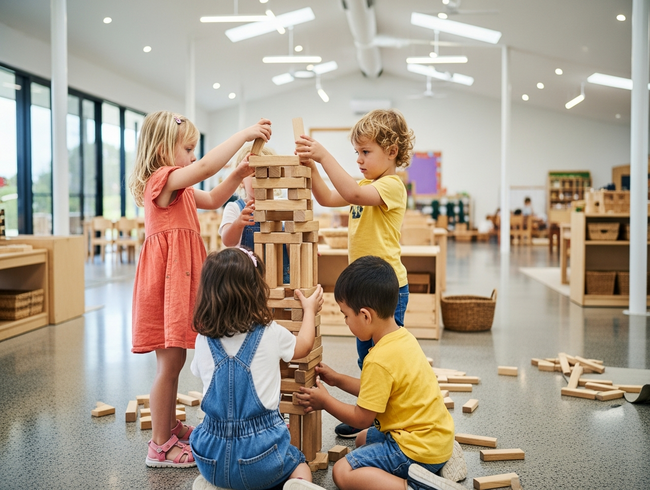
Collaborative play builds both strategic thinking and essential social skills for school readiness.
Creating a Strategic Learning Environment at Home
Parents can extend strategic thinking development at home without needing expensive materials or complicated setups. Often the most powerful strategic learning happens with simple, open-ended materials and a bit of unhurried time.
A few things help:
Calm, organised spaces
Strategic play needs room to breathe. Children need space to think, plan, and adjust without constant interruption. Designating a quiet time for focused play — or just keeping a corner of the lounge tidy for it — makes a real difference.
Materials within easy reach
When puzzles, building blocks, and games are accessible rather than tucked away in a cupboard, children are far more likely to choose strategic play on their own.
Regular family game time
This doesn’t have to be elaborate. Choosing games that work for mixed ages and focusing on the playing, not the winning, builds strategic thinking while strengthening family connection. Cooperative games — where the family works together toward a shared goal — are particularly good for young children who aren’t yet ready for the emotional load of competition
Assessing Strategic Thinking Development
Strategic thinking grows in fits and starts, not in a straight line. A child might show strong planning skills in one area and still be learning the basics in another. A few signs that strategic thinking is developing well:
- Planning behaviours: They start to think before acting — gathering materials before a project, talking through what they’ll do, or pausing to look at a problem before diving in.
- Pattern recognition: They notice similarities and differences, predict what’s likely to happen based on past experience, and use what they know to guide their choices.
- Flexible thinking: When something isn’t working, they try a different approach. They can hold more than one possibility in mind at once.
- Thinking about their thinking: They start to explain their reasoning, reflect on what worked, and notice when they’ve changed their mind. This is metacognition — a quiet but powerful indicator of cognitive development.
Supporting Continued Development
Strategic thinking development is a gradual process that continues well beyond the preschool years. The foundation established through early strategic play experiences supports increasingly complex reasoning throughout childhood and adolescence.
Children who have strong foundations in strategic thinking are better prepared for academic challenges that require planning, problem-solving, and flexible thinking. They’re also more confident in approaching new challenges and more resilient when facing setbacks.
Investing in the Foundations
Strategic thinking through play isn’t just preparation for school — it’s preparation for a lifetime of thoughtful, flexible problem-solving. The cognitive habits, social skills, and emotional resilience that develop through strategy play serve children long after the puzzles are packed away.

At Okinja Early Learning Centre on the Sunshine Coast, we’re grounded in decades of early childhood education experience and the belief that every child’s learning journey is unique. Our play-based, emergent, Reggio-inspired program is designed to support that journey at every stage — to challenge, extend, and delight children as they grow into capable, confident lifelong learners.
If you’d like to see how this approach comes to life, we’d love to show you around. Book a tour or call us at 07 5479 2222.