As a parent, you drop your child off, see them run towards a sandpit or a collection of colourful blocks, and you might have a fleeting thought: “What are they really learning in there?” It’s a natural question. For generations, we’ve been conditioned to see ‘learning’ as structured, quiet, and desk-bound, while ‘play’ is seen as its fun-loving, chaotic opposite.
At Okinja Early Learning Centre & Kindergarten, our extensive experience has shown us a more profound truth, one backed by decades of developmental science: authentic play isn’t a break from learning. It is the most powerful, effective, and essential form of learning a young child can experience.
High-quality, play-based learning isn’t about leaving children in a room full of toys and hoping for the best. It is a carefully considered pedagogical approach, guided by Australia’s Early Years Learning Framework (EYLF). It involves intentional teaching, where our educators create rich invitations for discovery and skillfully guide children to deeper understanding. It is the art of seeing the complex cognitive, social, and emotional work happening beneath the surface of what looks like simple fun.
This is the guidance other centres often won’t provide. We want to pull back the curtain and show you the incredible developmental science behind the play you might see in any high-quality early learning environment. Below, we explore 18 powerful examples of this in action, from quiet indoor corners to bustling outdoor spaces, to show you what your child is really learning.
Cognitive Development & Problem-Solving: Building the Mind
These activities are about constructing knowledge, not just objects. Children learn to think, reason, and understand how the world works.
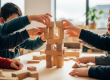
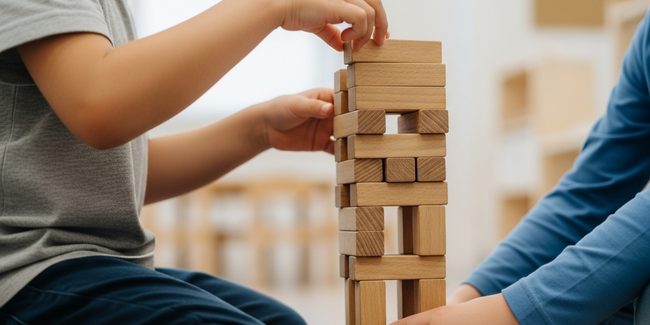
1. The Block City Engineers
- The Invitation: A low basket filled with a variety of wooden blocks—cubes, cylinders, ramps, and planks—on a flat, open floor space.
- What It Looks Like: A child carefully stacking blocks, watching a tower wobble, and trying a different approach. Two children might be negotiating where to place a “bridge.”
- The Hidden Learning: This is a masterclass in early physics and engineering. The child learns about gravity, stability, and balance through trial and error. They are exploring geometry (shapes, symmetry), spatial awareness (position, direction), and numeracy (counting, sorting, measuring). When a tower falls, it’s not a failure; it’s a successful experiment in cause and effect.
2. The Water-Flow Scientists (Water Play)
- The Invitation: A water table with jugs, funnels, tubes, and floating/sinking objects.
- What It Looks Like: Pouring water from one container to another, watching it splash, and noticing that a leaf floats while a stone sinks.
- The Hidden Learning: Children are conducting hands-on scientific experiments. They are discovering the properties of liquids and concepts like volume, displacement, and flow. This sensory experience is deeply engaging and helps build foundational concepts for later learning in STEM (Science, Technology, Engineering, and Maths).
3. The Puzzle Masters
- The Invitation: A selection of age-appropriate puzzles, from simple knob puzzles to more complex jigsaws, accessible on a low shelf.
- What It Looks Like: A child turning a piece, trying to fit it into a space, and using their fingers to feel the edges.
- The Hidden Learning: Puzzles are a fantastic workout for the brain. They develop problem-solving skills, shape recognition, and memory. The focused effort also builds persistence and concentration—critical skills for school readiness. Each successfully placed piece delivers a satisfying sense of accomplishment, building self-esteem.
Language, Literacy & Communication: The Seeds of Storytelling
Literacy isn’t just about reading and writing; it’s about making meaning, communicating ideas, and understanding narrative.
4. The Dramatic Play Directors
- The Invitation: A home corner set up with dolls, play food, old telephones, and dress-up clothes.
- What It Looks Like: Children pretending to be a family, a doctor, or a chef. They create dialogue, assign roles, and act out familiar scenarios.
- The Hidden Learning: Dramatic play is a language explosion. Children practise conversational skills, test new vocabulary in a safe context, and learn the art of negotiation (“Okay, you be the baby this time”). They are also developing narrative skills—creating characters, a plot, and a sequence of events, which is the very foundation of reading comprehension.
5. The Story Stone Authors
- The Invitation: A small bag of smooth, flat stones, each with a simple picture painted on it (e.g., a sun, a tree, a key, a child).
- What It Looks Like: A child pulls stones from the bag one by one and weaves a tale connecting the images. “Once upon a time, a boy was walking under the sun…”
- The Hidden Learning: This activity nurtures imagination and sequential thinking. Without the pressure of writing, children learn to structure a story with a beginning, middle, and end. It shows them that symbols (the pictures) represent ideas, a core concept for understanding written text.
6. The Puppet Show Producers
- The Invitation: A simple puppet theatre and a box of hand puppets.
- What It Looks Like: Children hiding behind a screen, using different voices for different puppets, and interacting with an “audience” of their peers.
- The Hidden Learning: Puppetry allows children to experiment with language and emotion from a safe distance. A shy child might find a confident voice through a lion puppet. They are practising public speaking, dialogue, and emotional expression, building confidence that translates into all areas of communication.
Social & Emotional Skills Through Play
This is where children develop the most critical life skills: empathy, cooperation, self-regulation, and resilience.
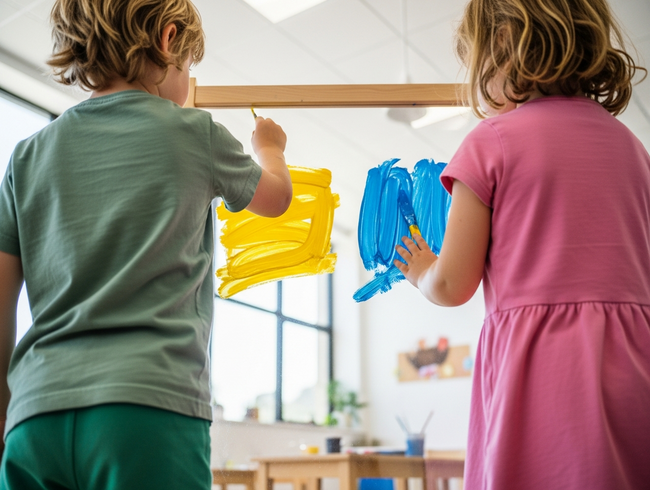
7. The Cooperative Mural Painters
- The Invitation: A large sheet of paper taped to an easel or wall with pots of paint and brushes available.
- What It Looks Like: Several children painting on the same canvas, sometimes collaborating on a single image, sometimes working in their own space but sharing materials.
- The Hidden Learning: This is a powerful lesson in sharing space and resources. Children learn to negotiate (“Can I use the blue paint when you’re done?”), respect others’ work, and contribute to a collective goal. It builds a sense of community and belonging, a core principle of the EYLF.
8. The Restaurant Role-Play
- The Invitation: A small table set with plates, a notepad and pencil for “orders,” and play food.
- What It Looks Like: Children taking on the roles of chef, waiter, and customer. They practise turn-taking, listening to others’ requests, and using polite language.
- The Hidden Learning: This complex social play requires self-regulation (waiting for your food), empathy (understanding what the customer wants), and problem-solving (what happens when we run out of pizza?). These interactions are rehearsals for real-world social navigation.
9. The “Follow the Leader” Explorers
- The Invitation: An educator or child initiates a simple game of follow the leader, either indoors or outdoors.
- What It Looks Like: A line of children giggling as they copy the leader’s actions—hopping, crawling, or making a silly face.
- The Hidden Learning: While it seems simple, this game teaches observation, turn-taking, and impulse control. For a child to wait their turn to be the leader and to follow when they aren’t, they are exercising crucial self-regulation muscles.
The understanding that a child’s environment is a ‘third teacher’ is fundamental to a quality program. It means every space and material is chosen with intention. This philosophy is at the heart of our approach at Okinja Early Learning Centre & Kindergarten. Our four distinct playgrounds and our connection to the Sunshine Coast’s natural beauty aren’t just features; they are purposefully designed learning landscapes that invite social interaction, problem-solving, and a deep sense of belonging.
Developing Fine Motor Skills Through Play
Fine motor skills involve the small muscles in the hands and fingers, which are essential for learning to hold a pencil, use scissors, and button a coat.
10. The Playdough Sculptors
- The Invitation: Lumps of fresh playdough with simple tools like rolling pins, cookie cutters, and craft sticks.
- What It Looks Like: Children squishing, rolling, pinching, and flattening the dough.
- The Hidden Learning: Every action is strengthening the muscles and improving the coordination needed for writing. It’s a sensory, creative, and calming activity that builds hand strength and dexterity without the pressure of forming perfect letters.
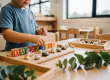
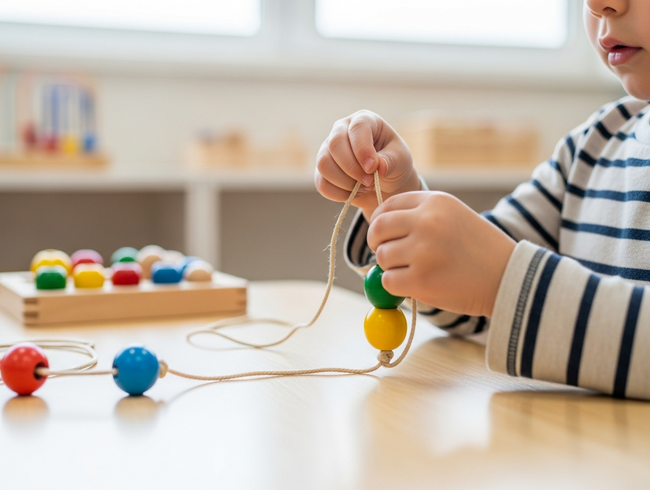
11. The Threading & Lacing Specialists
- The Invitation: A tray with large wooden beads and stiff laces, or chunky pasta and string.
- What It Looks Like: A child carefully holding a lace and concentrating on pushing it through the hole in a bead.
- The Hidden Learning: This activity is brilliant for developing hand-eye coordination, a pincer grasp (using the thumb and forefinger), and immense concentration.
12. The Mark-Making Artists
- The Invitation: Easels with paint, chalk on a sidewalk, or crayons and paper on a table.
- What It Looks Like: Children making swirls, lines, and dots, exploring how different tools make different marks.
- The Hidden Learning: This is the very first stage of writing. Before a child can form letters, they must understand that they can make a mark that represents an idea. This exploratory stage builds confidence and motor control, paving the way for formal handwriting.
Gross Motor Skills & Physical Wellbeing: A Healthy Body, A Ready Mind
Large muscle movements build physical literacy and also have a profound impact on a child’s ability to focus and learn in other areas.
13. The Obstacle Course Navigators
- The Invitation: A simple course made from cushions to climb over, hoops to step in, and a tunnel to crawl through.
- What It Looks Like: Children joyfully running, jumping, crawling, and balancing as they move through the course.
- The Hidden Learning: Children are developing balance, coordination, and strength. They are also learning to assess risk in a safe environment and building spatial awareness as they navigate their bodies through the space.
14. The Expressive Dancers
- The Invitation: Music is played, perhaps with props like scarves or ribbons.
- What It Looks Like: Children moving their bodies freely to the rhythm of the music—spinning, leaping, and swaying.
- The Hidden Learning: Dancing develops body awareness, rhythm, and coordination. It is also a wonderful outlet for emotional expression and a fantastic way to improve cardiovascular health and overall wellbeing.
15. The Outdoor Explorers
- The Invitation: Supervised time in a natural outdoor space to run on uneven ground, climb a small incline, or carry natural objects.
- What It Looks Like: Children running freely across the grass, balancing on a log, or digging in the dirt.
- The Hidden Learning: Outdoor play is essential. It provides the sensory input and physical challenges that are often missing indoors. It builds strong bones and muscles, improves balance, and has been proven to enhance focus and reduce stress.
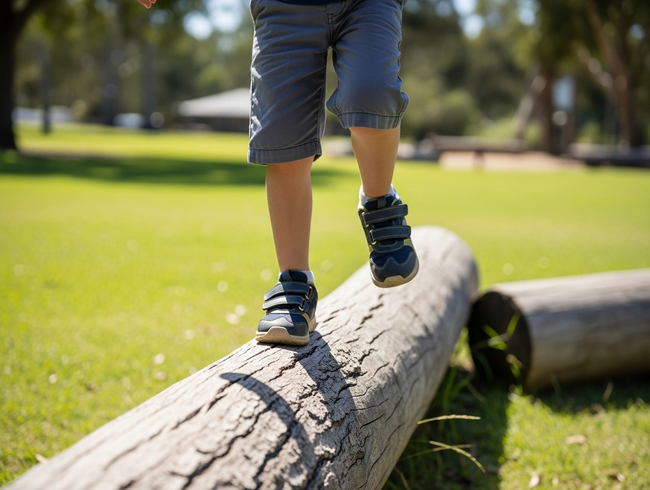
This deep connection between nature and holistic development is why our philosophy is so deeply rooted in our Sunshine Coast environment. We see our proximity to Alex Forest Bushland Park not just as a location, but as an extension of our classrooms—a living library of textures, sounds, and experiences that support every aspect of your child’s growth.
Sensory & Nature Exploration: Learning Through the Senses
Children are sensory beings. They learn about the world by touching, tasting, smelling, seeing, and hearing it.
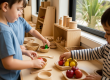
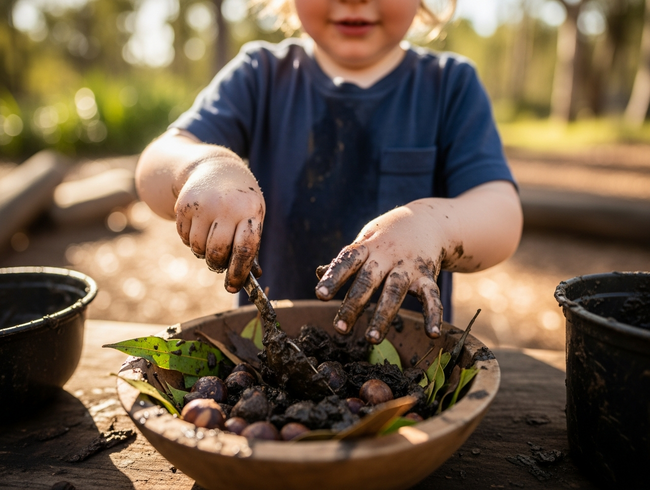
16. The Mud Kitchen Chefs
- The Invitation: An outdoor “kitchen” area with pots, pans, utensils, and access to dirt, sand, water, leaves, and flowers.
- What It Looks Like: Children mixing “mud pies,” decorating them with leaves, and serving them to friends.
- The Hidden Learning: This is a rich sensory experience that connects children to the natural world. It fosters creativity, role-playing, and scientific thinking as they observe how the consistency of mud changes when they add water.
17. The Sandpit Archaeologists
- The Invitation: A sandpit with buried “treasures” (like shells or smooth stones) and tools like shovels, brushes, and buckets.
- What It Looks Like: Children digging, sifting, and carefully brushing sand away to uncover hidden objects.
- The Hidden Learning: Besides the obvious sensory benefits, this play develops fine motor skills (using tools) and introduces concepts of object permanence (knowing something exists even when you can’t see it). It can also spark an interest in history and discovery.
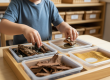
18. The Nature Art Creators
- The Invitation: A collection of natural loose parts—twigs, leaves, flowers, seed pods, and pebbles—on a mat.
- What It Looks Like: Children arranging the items to create patterns, pictures of faces, or abstract designs.
- The Hidden Learning: This activity encourages creativity and an appreciation for nature’s beauty. It develops skills in sorting, classifying, and pattern-making—all foundational mathematical concepts.
Play is Purposeful
As you can see, play is not idle time. It is the complex, challenging, and joyful work of childhood. In a high-quality environment, every play-based activity is an opportunity for your child to develop the critical skills they need for school and for life. They are not “just playing”; they are experimenting, creating, negotiating, problem-solving, and building the architecture of their own minds.
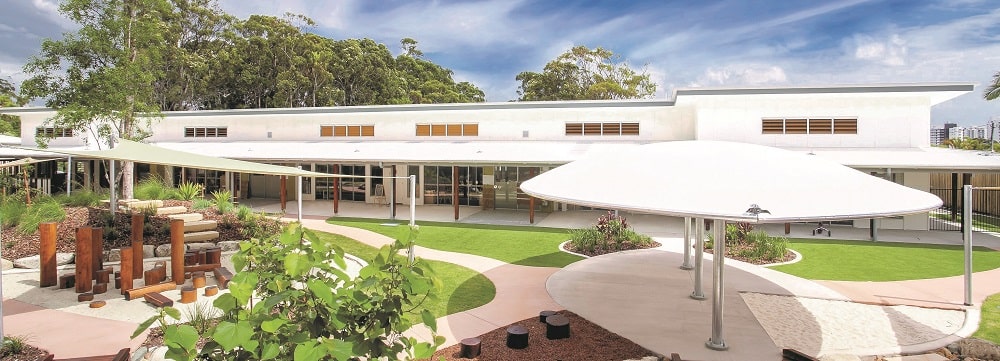
Our role as expert educators, guided by the National Quality Framework, is to see and nurture the incredible learning happening in every moment. We create the invitations, ask the questions that deepen thinking, and document this amazing journey of growth.
The best way to understand the power of our play-based philosophy is to see the joy and deep learning it sparks in person. We invite you to book a tour to see how our expert educators intentionally design experiences that turn a child’s natural curiosity into a foundation for lifelong learning. You’ll see how our thoughtful indoor spaces and enriching outdoor areas work together to support this powerful approach. Contact Okinja ELC on 07 5479 2222 to arrange your visit.